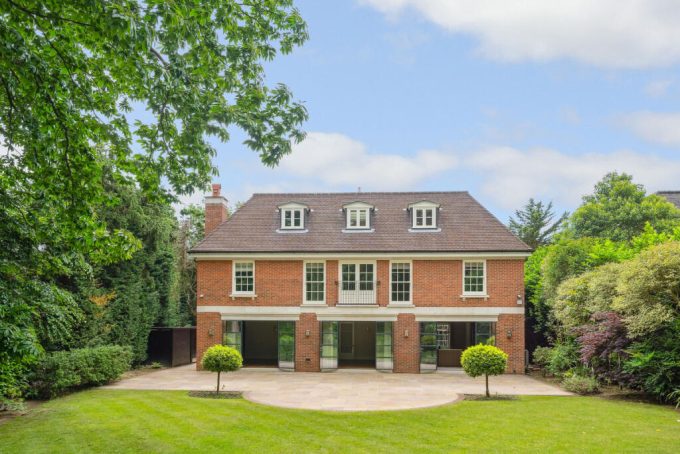
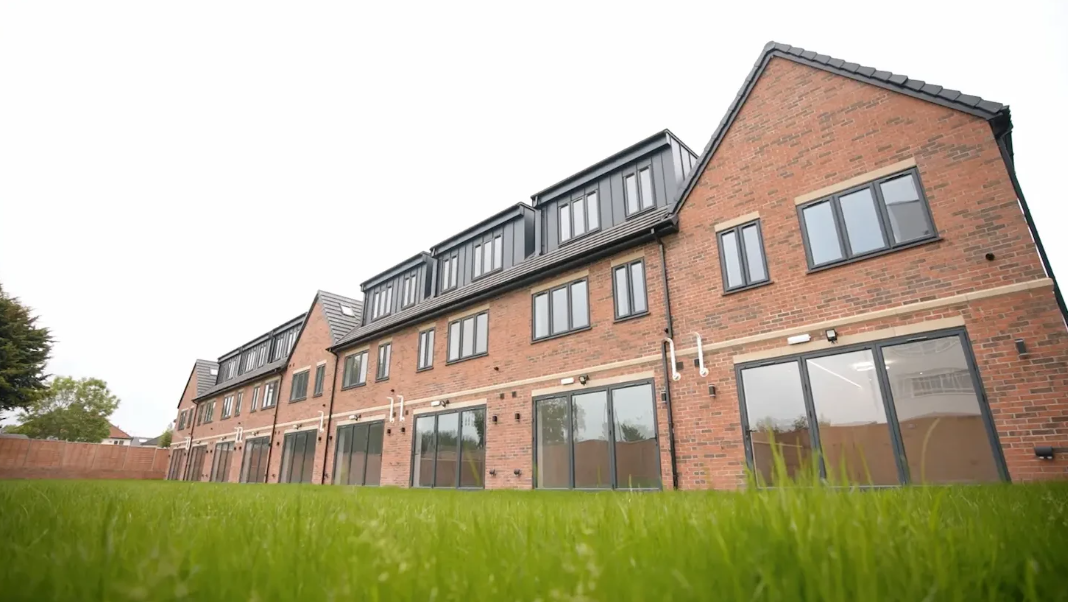
Cobham is one of the most consistently desirable addresses in the Surrey commuter belt. It is not a new discovery. Families have been choosing it over London suburbs for decades, and the reasons have not changed: excellent schools, fast trains, Green Belt countryside, and a property market that holds value through cycles.
What makes it worth a dedicated guide is how different building here is from building in London. The planning authority is different. The Green Belt rules are stricter. The conservation area requirements are specific to this village. And the contractor market, while excellent, operates on a slightly different basis to the London builds this site mostly covers.
This guide covers why Cobham attracts luxury builders, the property market in 2026, how the planning system works under Elmbridge Borough Council, where Green Belt policy applies and what it means in practice, what a luxury build costs in this location, and how to find a plot and assemble the right team.
For context on the broader build process, our luxury home build timeline guide and our cost per square metre breakdown for the South East both apply directly here.
Why Cobham Attracts Luxury Home Builders
Cobham sits 17 miles from central London in the Borough of Elmbridge, one of the most affluent boroughs in England. It consistently ranks among the most expensive places to live outside London, driven by a combination of outstanding schools, Green Belt setting, and strong demand from professional and international families who want London access without London density.
The schools alone justify the postcode for many buyers. ACS Cobham International School is one of the largest and most highly regarded international schools in Europe. Reed’s School, Notre Dame Senior School, and a strong cluster of outstanding state schools make this one of the best-served areas for education in the South East. For families relocating from overseas or from central London, this is often the deciding factor.
The transport links are strong. Cobham and Stoke d’Abernon railway station provides services to London Waterloo in approximately 40 minutes. The M25 junction 10 is minutes away. Heathrow is reachable in 25 to 35 minutes by road. For senior professionals, business owners, and internationally mobile families, this combination of rural calm and global connectivity is genuinely difficult to match.
The property market reflects all of this. According to Rightmove and Zoopla 2026 data, the average property in Cobham sells for just over £1m, with detached homes averaging £1.6m. Significant luxury houses on the best roads, including Leigh Hill Road, Fairmile Lane, and the private estates around Oxshott, regularly transact at £3m to £5m and above. A genuinely exceptional new build on a good plot at the right specification has a clear and proven market.
Market context: Cobham has been consistently ranked as the second most expensive town in the UK outside London by average property price. That market depth matters. It means a well-executed luxury build here has a buyer pool that matches the ambition of the project.
Why Build Rather Than Buy in Cobham
The buying case in Cobham is strong. There is a wider range of existing stock here than in Virginia Water, covering Victorian and Edwardian houses in the village, large 1930s and post-war detached homes on the Fairmile, and various private roads and gated estates in Oxshott and Stoke d’Abernon.
But the same fundamental arguments for building apply here as they do across prime Surrey. Much of the luxury stock is 30 to 50 years old. Layouts are dated. Energy performance is poor. Roof structures are tired. The cost of buying a £3m to £4m older home and refurbishing it to modern specification, with the disruption that entails, often comes close to what a new build on a comparable plot would cost. And the new build delivers exactly what you want, not an adaptation of what someone else wanted.
The stamp duty advantage is also meaningful. As our build versus buy guide for 2026 explains, stamp duty on a land purchase is calculated on the land value only. On a £1.5m plot in Cobham, stamp duty as a primary residence runs to approximately £63,750. Buying a finished £4m house carries stamp duty of approximately £308,750. The saving of £245,000 is a real number that changes the financial picture of the project.
VAT is zero-rated on new residential construction. On a £1.8m build contract, that represents a £360,000 saving compared to a refurbishment project of equivalent scale, where VAT applies in full. These two factors together make the financial case for building in Cobham more compelling than it appears at first glance.
The Planning Landscape: Elmbridge Borough Council
All planning applications in Cobham are determined by Elmbridge Borough Council, based at the Civic Centre in Esher. Elmbridge is a well-resourced planning authority with a consistent approach to residential development and a strong track record of enforcing its policies. Understanding how it thinks before you develop your design is essential.
The key policy documents are the Elmbridge Core Strategy, which sets the borough-wide planning framework, the Development Management Policies document, which covers the detailed criteria against which applications are assessed, and the Local Plan review currently underway. Surrey County Council also has a role on highways, flooding, and certain environmental matters.
Pre-application advice
Elmbridge offers a paid pre-application advice service for residential proposals. For a new luxury dwelling, a pre-application meeting with the case officer is not optional. It is the most reliable way to understand the council’s likely response to your proposal, identify any policy issues early, and develop a design that has a realistic chance of approval. The fee for a householder pre-application is modest. The cost of designing in the wrong direction for three months is considerably higher.
Elmbridge’s planning committee is active and engaged. Local residents and the active Conservation Area Advisory Committee for Church Cobham take a close interest in significant proposals. A well-presented application supported by thorough documentation is more likely to receive officer support and avoid committee referral than one that leaves questions unanswered.
Conservation areas
Cobham has two designated conservation areas. The main Cobham Conservation Area was designated in 1973 and is centred on the historic core of Church Cobham, including the River Mole, Mill Road, River Hill, and Church Street. There is also the Cobham Plough Corner Conservation Area covering the cluster around the Plough public house. Both areas contain listed buildings: the Church of St Andrew is Grade I, and Ham Manor, Cedar House, and Church Stile House are all Grade II*.
Within the conservation areas, Permitted Development rights are restricted or removed. Planning permission is required for works that would be permitted elsewhere, including changes to windows, external materials, and alterations affecting the street scene. Any new development must preserve or enhance the character of the area, and proposals will be assessed against the Character Appraisal and Management Proposals document adopted in 2019.
Most luxury new builds in Cobham sit outside the conservation areas in the village, on the private residential roads to the south and east. But understanding whether your plot is within or adjacent to a designated area before you commission a design is a basic first step.
Thames Basin Heaths Special Protection Area
Like Virginia Water and much of north-east Surrey, parts of Cobham fall within the 5-kilometre buffer zone of the Thames Basin Heaths Special Protection Area. Any new residential development within this zone that increases net residential occupancy must make Suitable Alternative Natural Greenspace and Strategic Access Management and Monitoring contributions. These are fixed statutory obligations. Your planning consultant will calculate the exact sums required for your specific plot and application.
Green Belt: The Most Important Factor in Cobham
This is the central planning constraint for anyone thinking about building a new luxury home in Cobham. Approximately 75% of Surrey falls within the Metropolitan Green Belt, according to Surrey-wide planning analysis, and a very significant proportion of the land around Cobham is designated Green Belt. The Cobham Green Belt Group and the Cobham Conservation and Heritage Trust are both active organisations with strong community support for resisting Green Belt development.
The National Planning Policy Framework states clearly that the fundamental aim of Green Belt policy is to prevent urban sprawl by keeping land permanently open. New buildings in the Green Belt are inappropriate development unless they fall within a specific list of exceptions. Simply wanting to build a house on a piece of Green Belt land is not an exception.
For luxury residential projects, the realistic routes in the Green Belt are:
Replacement dwellings
This is the most common route for luxury new builds in the Cobham Green Belt. If an existing dwelling stands on a plot, you may be able to demolish it and replace it with a new home. Elmbridge will assess whether the replacement is materially larger than what it replaces. There is no fixed percentage rule that applies uniformly, but proposals that increase floor area by more than 50% over the original dwelling face much higher scrutiny and will generally need strong justification.
The practical implication: if you are buying a plot in the Green Belt, the size and footprint of the existing house matters as much as the plot size. A larger existing house gives you more scope to build what you want within Green Belt policy. A small bungalow on a large plot in the Green Belt does not automatically give you permission to build a 6,000 square foot luxury home.
Conversion and extension of existing structures
Converting or extending an existing building in the Green Belt can be acceptable where the works preserve the openness of the Green Belt and do not result in disproportionate additions. For luxury projects, this route is often used in conjunction with a replacement dwelling application: the main house is replaced and a separate outbuilding, garage, or ancillary structure is converted or extended to create additional accommodation.
Outside the Green Belt
The most straightforward planning position for a new luxury dwelling in Cobham is on a plot that sits outside the Green Belt, within the settlement boundary. These plots are rarer and more expensive because they are not constrained by Green Belt policy. In practice, they are found on the established residential roads within Cobham village and on the private roads in the wider area where development has already occurred and a new dwelling is replacing or supplementing existing housing stock.
Watch out: Never buy a Cobham plot on the assumption that Green Belt status can be overcome through a well-argued planning application. Green Belt policy is legally robust and Elmbridge enforces it actively. The Cobham Green Belt Group and local residents are well-organised in opposing Green Belt applications. Establish the planning position before you exchange on any land.
Where the Best Plots Are in Cobham
Cobham is not a single residential market. It covers a wide area and the character, planning position, and values vary considerably across it. Understanding which parts of Cobham suit a luxury new build project helps focus a search.
Fairmile
The Fairmile is the long private road running south from the A307 through some of Cobham’s finest residential addresses. Large detached homes sit on generous plots with mature planting and significant privacy. Many of the plots here are outside the Green Belt. The existing stock includes older homes from the 1930s through to more recent builds, creating genuine opportunities for replacement development. Fairmile properties at the upper end transact at £3m to £6m, with exceptional new builds commanding premiums above that.
Leigh Hill Road and Oxshott border
The area around Leigh Hill Road and the Oxshott boundary is home to some of the largest plots and most significant homes in the Cobham area. This borders the Oxshott Estate, a private residential area with its own character and community. Land sales here in recent years have included plots transacting at £1.5m to £3m for buildable sites with planning consent or realistic planning potential.
Stoke d’Abernon and Downside
The villages of Stoke d’Abernon and Downside, both within Elmbridge, sit to the south and southeast of Cobham. They offer a quieter, more rural setting while maintaining proximity to the Cobham amenities and transport links. Downside has its own conservation area designation. These villages suit buyers who want more land, more privacy, and slightly less of the village feel in exchange for more space.
Church Cobham and the village core
The historic village core around Church Street and the River Mole is more constrained. Conservation area designations apply, the plots are typically smaller, and the character of the area means large contemporary new builds are harder to achieve. This part of Cobham is better suited to sensitive renovation of period properties than to ambitious new construction.
Practical advice: For a serious luxury new build brief in Cobham, focus the search on Fairmile, the Leigh Hill Road area, and the private roads to the south. These offer the combination of plot size, planning flexibility, and finished value that makes a significant build financially viable.
Finding a Plot in Cobham
Plot supply in Cobham is tighter than in Virginia Water. The borough is smaller, Green Belt coverage is extensive, and the local community is active in opposing intensification. Most available plots are found through specific channels rather than general property portals.
- Savills’ Surrey country house team handles a significant proportion of significant Cobham transactions. Register directly and follow up actively
- Knight Frank, Strutt and Parker, and Hamptons all have active Surrey offices and knowledge of pre-market opportunities in this area
- Davies Property Partners is a well-regarded Cobham specialist and a useful source of local market intelligence and off-market awareness
- Elmbridge Borough Council’s planning search allows you to search by postcode for KT11 and KT10 for recent demolition applications, replacement dwelling consents, and new dwelling permissions. These signal plots that may be available or approaching the market
- HM Land Registry title searches for overgrown, unmaintained, or visibly under-occupied large plots. A well-written direct approach to an owner can open conversations that never reach any agent
For the full due diligence process on any plot you identify, our guide to finding a building plot in London and the Home Counties covers ground surveys, legal checks, planning assessment, and what to establish before you exchange.
Design and Specification: What Cobham Expects
Cobham is architecturally mixed in a way that Virginia Water is not. The village core is predominantly traditional Surrey vernacular: red brick, tile hanging, timber detailing, and period features that reflect the historical development of the area. The private roads and estates outside the village include everything from Georgian pastiche to bold contemporary architecture.
Traditional versus contemporary
Elmbridge is not a conservative planning authority when it comes to design. Well-argued contemporary proposals that respond thoughtfully to their context and deliver high quality have succeeded in Cobham and across the borough. What the planning authority resists is poor design, whether traditional or contemporary. A badly proportioned traditional house on a large plot is not automatically easier to consent than a well-resolved contemporary one.
Outside the conservation areas and the Green Belt, the design question is primarily about quality and context rather than style. Your architect needs to understand the character of the specific road and neighbourhood where the plot sits, and develop a design rationale that demonstrates engagement with that context. A generic design copied from another project is less likely to succeed than one that is clearly of its place.
Scale and massing
In the Green Belt, scale is a planning constraint as much as a design preference. The replacement dwelling rules mean that the size of what you can build is related to what already exists. Outside the Green Belt, the scale is set by the character of the surrounding properties and the plot size. On Fairmile and the surrounding roads, homes of 4,000 to 8,000 square feet are entirely consistent with the character of the area and achievable within normal planning policy.
Materials and landscape
Surrey vernacular materials, brick, tile, timber, and natural stone, sit well in Cobham and are well-received by Elmbridge planners in most contexts. For contemporary builds, high-quality render, zinc, and dark-stained timber are regularly approved. What does not work is low-quality materials or finishes that look out of place in a setting where the surrounding properties have been carefully maintained and valued for decades.
Landscape is particularly important in a Green Belt and Surrey countryside context. Cobham’s appeal is substantially about its trees and greenery. A new build that removes mature trees, reduces permeability, or creates an over-formalised garden setting sits poorly with both the planning authority and the market. Design the landscape as part of the scheme from the start, with a landscape architect involved at the same time as the building architect.
What Does It Cost to Build a Luxury Home in Cobham?
Cobham sits in the Surrey premium band for build costs, below inner London but above the national average. The same labour market that drives up London construction costs applies across north-east Surrey. The best trades are in high demand, and the luxury contractor market in this area is busy.
Realistic 2026 construction costs per square metre for Cobham:
- Good specification (mid-range kitchen, underfloor heating, aluminium windows, engineered flooring): £2,800 to £3,500 per square metre
- High specification (bespoke kitchen, smart home systems, structural glazing, natural stone, MVHR): £3,500 to £5,000 per square metre
- Ultra-high-end bespoke (full luxury specification, imported stone, Crestron automation, indoor pool or spa): £5,000 to £7,000 per square metre
For a 500 square metre luxury home at high specification, construction costs run to £1.75m to £2.5m. Add professional fees at 12 to 15%, landscaping for a Surrey plot with mature planting, planning costs, smart home infrastructure, and a 12 to 15% contingency, and the all-in project cost before land runs to £2.4m to £3.4m.
Land on Fairmile and the better roads around Cobham, with planning consent for a substantial replacement dwelling, typically transacts at £1m to £2.5m depending on plot size, the size of the existing dwelling, and the quality of the planning position. The Leigh Hill Road and Oxshott border area can exceed this range for larger sites.
Total budget guide: A substantial luxury new build in Cobham, 450 to 600 square metres at high specification, should be budgeted at £3.5m to £5.5m all-in before furnishing. Ultra-high-end specification on a significant Fairmile or Leigh Hill Road plot can reach £6m to £8m total project cost.
The Build Process: What Is Specific to Cobham
Elmbridge planning timelines
Elmbridge is not a fast planning authority. The council has a full workload and significant major applications in the borough. A realistic timeline from pre-application to decision for a new luxury dwelling in Cobham is 5 to 8 months, assuming no objections and no significant policy issues. For a Green Belt replacement dwelling application that requires more detailed justification, or for a proposal that generates neighbour objections, that extends to 9 to 12 months or more.
Elmbridge’s planning committee meets regularly and officers are active in seeking design improvements before applications reach committee. Building a relationship with the case officer through the pre-application process makes this more predictable.
Surrey County Council highways
New access points onto Surrey County Council-managed roads, changes to existing access, or developments that generate significant vehicle movements require SCC highways approval. For a luxury new build on a private road this is not usually an issue. For a plot with access onto an A road, B road, or adopted county road, SCC’s requirements need to be understood and designed for from the outset. A transport statement or transport assessment may be required as part of the planning application.
Trees and the arboricultural impact
Cobham’s character is substantially defined by its mature trees. Tree Preservation Orders protect many of the most significant specimens across the borough. Elmbridge takes TPO enforcement seriously, and removing a protected tree without consent is a criminal offence with no time limit on prosecution.
Before you commission a design, commission an arboricultural survey of every significant tree on and adjacent to the plot. The survey establishes which trees are protected, the root protection zones that constrain where foundations can be placed, and any trees that are likely to be subject to TPO applications if they are not already protected. Your structural engineer and architect both need this information before they can design the building properly.
The contractor market in Surrey
The luxury contractor market in Surrey is excellent and distinct from the London market. There are a number of outstanding builders based in Surrey and Berkshire who specialise in high-end residential work in this area and have built relationships with local planning officers, party wall surveyors, and specialist trades over many years. These contractors understand the quality expectations of the local market and the working practices that come with building in established residential areas where neighbours are closely invested in how construction is managed.
The best of them are busy. Booking 6 to 9 months in advance of your intended start on site is the realistic position. If you identify a contractor earlier in the project through the tender process, agreeing a programme reservation with a contractor you trust is preferable to waiting and taking whoever is available.
Schools, Lifestyle, and What Buyers at This Level Are Looking For
This section matters because it informs the brief. The people building luxury homes in Cobham in 2026 are overwhelmingly families. They are choosing Cobham specifically because of what it offers families. That shapes what the home needs to do.
ACS Cobham International School is the anchor for international families. Its catchment and the logistics of the school run shape where people want to live within Cobham. Properties with easy access to the ACS campus, ideally without needing to use the A3, carry a premium in this market. If you are building to live here and this is relevant to your family, factor the school run into your plot search.
The lifestyle in Cobham is outdoor and active. Nearby attractions include Painshill Park, Claremont Landscape Garden, and extensive National Trust land. Surrey Hills walking and cycling is easily accessible. The brief for a luxury home here typically includes generous outdoor space, covered terracing designed for year-round use, a high-quality kitchen that integrates with the garden, boot rooms and practical family spaces, and garaging for multiple vehicles. The specification is high but the brief is grounded in how a family actually lives, not in aesthetic display.
Buyers at the £3m to £5m level in Cobham are buying a finished, move-in ready home that needs nothing doing to it. They expect smart home systems to work from day one, energy performance to be excellent, and the finish to be consistent throughout. A partially completed or poorly finished luxury home does not perform at this level. The standard needs to be maintained across every room, not just the principal rooms.
Where to Start
If you are seriously considering building a luxury home in Cobham, the first steps are the same as for any prime Surrey location, but with specific Cobham additions.
Establish the planning position of any plot before you pay serious attention to it. Is it within the Green Belt? Within a conservation area? Within the Thames Basin Heaths buffer zone? Does it have existing planning consent and if so what does it permit? These questions have answers that are available before any money is spent.
Appoint an architect with specific Elmbridge experience before you make an offer on a plot. Their assessment of what is achievable under Green Belt policy, conservation area requirements, and Elmbridge’s design expectations should form part of the offer decision, not come after it.
Get an arboricultural survey done on any plot you are seriously interested in before exchange. The trees are often the most significant constraint on what can be built, and they are the thing most commonly discovered too late.
Commission a high-level cost plan from a quantity surveyor against your brief and the site parameters. Understand the all-in budget before you are committed to the land. The land price looks different when you know precisely what the total project costs.
Cobham rewards the same thing that every prime Surrey location rewards: thorough preparation before commitment, the right professional team, and a brief that is honest about what the location and the market actually require. Our guide to 10 mistakes to avoid when building your dream home covers the most common ways these projects go wrong at every stage.
Related reading: Building a Luxury Home in Virginia Water | How to Find a Building Plot in London and the Home Counties | Planning Permission for Luxury Homes | How Much Does It Cost to Build a Luxury Home per Square Metre