
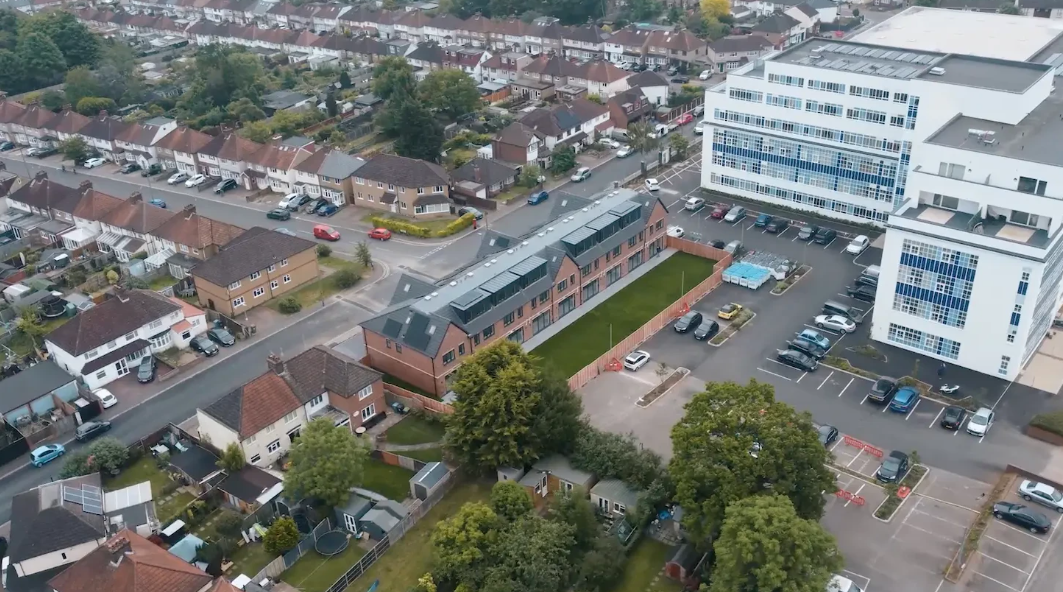
Finding land to build on in London is genuinely difficult. The city is one of the most densely developed in the world, and the most desirable areas have been built on for generations. Available plots are rare, competition is fierce, and the ones that reach the open market are often either overpriced or come with complications the seller has not advertised.
But plots do exist. They are found through specific channels, often before they are publicly listed, and they reward people who are well-prepared and move quickly when something good appears.
This guide covers where to look, what to look for, and how to assess what you find before committing to a purchase. It is written for people building a luxury home, not a speculative development, but the principles apply across the market.
Once you have found your plot, our guides on planning permission for luxury homes in London, how much it costs to build a luxury home in London in 2026, and the full build timeline from planning to completion will help you understand what comes next.
Why Finding a Plot in London Is Different
Most of the practical advice on finding building plots is written for rural or suburban self-builders. It does not translate well to London, where the market operates differently and the constraints are more complex.
According to Plumplot’s 2026 London property analysis, London’s developed land use stands at 40.6%, the highest of any region in England. There is simply less undeveloped land relative to demand than anywhere else in the country, and what exists is often subject to planning constraints, heritage designations, or infrastructure complications that make it challenging to build on.
The result is a market with three specific characteristics that you need to understand before you start:
Most good plots never reach the open market. They are acquired through relationships, off-market conversations, and professional networks before they are ever listed on a portal. If your entire search strategy relies on Rightmove and Zoopla, you will see the leftovers.
London plots are priced on hope value as much as current value. Sellers, especially landowners who have held a site for years, often price based on what they believe planning permission could unlock rather than what the land is worth today. You need to be able to separate current value from potential value before you make an offer.
Speed matters, but so does preparation. As noagent.properties’ 2026 London land guide notes, 70% of London properties sell below asking, with sellers accepting an average 4% discount. That negotiating room exists, but only if you have done the due diligence to justify your offer. Buyers who move fast without preparation make expensive mistakes. Buyers who move slowly lose plots to people who are better prepared.
Where to Look: The Seven Sources of London Building Plots
No single source will find you a plot. London land searches work best when you run multiple approaches simultaneously over a sustained period.
1. Specialist land and plot portals
The dedicated plot search platforms carry inventory that general property portals do not. PlotBrowser is the UK’s largest free listing service specifically for building plots and self-build land. Plotfinder operates a similar function and is widely used by land agents and architects who list sites they are aware of. Both are worth setting up alerts on for your target boroughs.
Rightmove and Zoopla also list plots under their land and new homes categories, but coverage is inconsistent. Use them as a secondary check, not a primary source.
2. Local estate agents and land agents
Most estate agents deal in existing homes. The Self Build Portal estimates that perhaps one in ten estate agents regularly handles building plots. That minority is worth identifying in your target area and registering with directly. Call them, explain what you are looking for, and follow up regularly. Agents who know you are a serious buyer will call you before they list.
Land agents are a separate profession and operate differently to estate agents. They act for landowners looking to realise value from undeveloped or developable sites and often have advance knowledge of sites coming to market. Building relationships with two or three land agents in your target boroughs is worth the time investment.
3. The planning register
Your local authority’s planning register is publicly searchable and contains every planning application submitted in the borough. Ellis and Co note that by checking the planning register, you may find a plot of land subject to a planning application that has not yet been put on the market. An application for demolition of an existing building or for a new dwelling on a vacant site signals that land may soon be available, often before the owner has decided whether to build themselves or sell.
Most London boroughs allow you to search recent applications by type and postcode. Set up a regular search cadence for your target areas. It takes thirty minutes a week and can surface opportunities that never reach any portal.
4. HM Land Registry and direct owner approaches
If you identify a piece of land that looks buildable but has no obvious owner, HM Land Registry’s title search service allows you to find out who owns it for a small fee. Once you have a name and address, a well-written letter introducing yourself and expressing a genuine interest in purchasing can open doors that would otherwise remain closed.
This approach requires patience and a thick skin. Most letters will receive no reply. But as Design for Me’s London plot finding guide notes, you would be surprised how many landowners are open to an offer they were not actively looking for. An overgrown side garden, a disused garage, or an unmaintained plot can represent a significant realised value for someone who has simply never been approached.
5. Property auctions
Auctions are one of the most reliable sources of development land in London. Ellis and Co’s London development guide recommends reviewing auction catalogues carefully for the planning permission status of each lot, arranging to view the plot with a surveyor before the auction date, and having a solicitor review the seller’s legal pack in advance.
The critical point with auctions is that you need to complete all your due diligence before the hammer falls, not after. Once you have made a successful bid, you are legally committed to purchase. There is no opportunity to conduct surveys or check planning constraints after the event. Budget time and professional fees for pre-auction due diligence on any lot you are seriously considering.
Also understand who you are competing with. At London land auctions, you will be bidding alongside developers who are pricing plots based on what they can build and sell across multiple units. A developer building six flats will pay more for a plot than you will building a single luxury home. Be realistic about which auctions are genuinely competitive for your use case.
6. The Right to Build register
Every local authority in England is legally required to maintain a Right to Build register and to give sufficient planning permissions to match the demand recorded on it. StudioFolk Architects note that many London boroughs maintain these registers and may occasionally release plots specifically for self-build homes.
In practice, the Right to Build register does not produce many direct plot opportunities in London. Demand far exceeds supply and councils vary considerably in how actively they use the register. But registering costs nothing and signals your intent to the local authority, which can occasionally be useful when sites do become available through council-led schemes or regeneration projects.
7. Your professional network
Architects, quantity surveyors, structural engineers, and luxury builders who work extensively in London accumulate knowledge of sites that is never published anywhere. They hear about landowners considering selling, they are approached by developers looking for buyers for surplus plots, and they see planning applications that suggest opportunities. The FMB recommends speaking to your architect and builder about your search as one of the first steps.
If you are already working with a professional team on your brief, tell them explicitly that you are looking for land. Ask them to keep you in mind if anything relevant crosses their desk. The best plots in prime London are often transacted this way, between professionals who know each other well.
What Makes a Good London Plot: The Six Things to Assess
Not all plots are what they appear to be. London sites come with hidden constraints that can fundamentally change what you are able to build and what the project will cost. Assessing these before you make an offer is not optional.
Planning status
There are three possibilities. A plot with full planning permission is the most straightforward. The consent has been granted, the principle of development is established, and you may be able to build to the approved scheme or apply to amend it. A plot with outline planning permission establishes the principle of development but leaves details to be resolved. A plot with no planning permission requires you to establish that consent can be obtained before you commit.
Never purchase land without understanding its planning status and without a professional assessment of what can be built. As Self Build magazine states directly, you need to understand what can actually be built on a plot before you can talk about what it is worth. That means looking carefully at planning policy, site constraints, and the surrounding context.
For a luxury home build, even a plot with planning permission may have conditions or constraints attached to the consent that affect the size, design, or materials of what you can build. Read the decision notice, all its conditions, and any Section 106 obligations that come with it before you exchange contracts.
Conservation area and listed building status
A significant proportion of the most desirable streets in London sit within conservation areas, where planning policy is more restrictive and scrutiny of new development is higher. Our planning permission guide for luxury homes in London covers the planning implications in detail. The relevant point at the plot assessment stage is to check conservation area boundaries using your local authority’s GIS mapping before you get too attached to a site.
If the plot includes or is adjacent to a listed building, the implications for what you can do are more significant still. Listed building consent is required for works affecting the character of a listed building, and the curtilage of a listed building can extend beyond its physical footprint. Get specialist heritage planning advice before proceeding on any site with a listed building connection.
Ground conditions
You cannot see ground conditions from a site visit. Page Building Consultants’ 2026 cost guide is explicit: soil conditions are frequently deceptive. A standard strip foundation might be priced at £110 per square metre, but if geotechnical surveys reveal unstable clay, peat, or high water tables, you may require piled foundations or reinforced rafts. These can easily double substructure costs before the first brick is laid.
Commission a Phase 1 desktop environmental study before exchange. If that study raises any concerns, follow up with a Phase 2 intrusive investigation before proceeding. On sites with any history of industrial, commercial, or garage use, contamination is a genuine risk. Ground remediation is expensive and the cost falls entirely on you as the buyer.
London clay is the dominant soil type across much of inner and south London. It is expansive, meaning it shrinks and swells with moisture content, which creates particular challenges for foundations near trees. If the site has mature trees or remnants of former trees, get specialist arboricultural and structural advice on the foundation implications before making an offer.
Services, utilities, and access
According to Garrington’s buying land guide, essential legal due diligence on any land purchase includes title and boundary checks via HM Land Registry, local authority searches to identify planning and infrastructure constraints, drainage and sewer searches to identify any public infrastructure beneath the land, and environmental searches for contamination or protected habitats.
For a luxury new build in London, utilities connections deserve specific attention. You need to know where water, gas, electricity, and drainage connect to the plot, whether there is adequate capacity for a large new dwelling, and what diversions or upgrades would be required. Utility diversion works in London can be slow, expensive, and disruptive to the build programme. Find out what is involved before you commit.
Access is equally important, both for construction and for living. A plot that can only be reached via a narrow shared passage, a private road with unclear maintenance obligations, or through another party’s land has practical and legal complications that need to be fully understood. Ensure legal access is confirmed in the title documents, not just assumed from physical proximity to a road.
Boundary disputes and rights of way
London’s densely built environment means boundary questions are common. Solicitors at Garrington recommend that your conveyancing solicitor cross-references the title plan to confirm there are no boundary surprises, hunts for any restrictive covenants in the legal documents that could stop your project, and checks for rights of way or third-party rights over the land.
Restrictive covenants are particularly worth understanding. An older covenant on a London plot, perhaps dating back decades, can prohibit certain types of development or require a neighbour’s consent for works. These do not automatically prevent development but they can complicate it and create legal exposure if ignored.
Flood risk
London’s rivers and flood plains create flood risk across many areas that look perfectly dry on a normal day. The Environment Agency flood map shows flood risk zones by postcode and is free to use. Check it for any site you are seriously considering. A plot in Flood Zone 2 or 3 will require a flood risk assessment as part of any planning application, and building in a high-risk zone is not always possible or insurable at acceptable cost.
How to Value a London Plot
Valuing land is harder than valuing a house. There are fewer comparables, the variables are more complex, and sellers often have unrealistic expectations based on the development value they believe the land could support.
The right framework, as Self Build magazine sets out, is to start from the end value and work backwards. Establish what a comparable finished luxury home on the same street or in the same area would sell for. Deduct the cost of building that home including land, construction, professional fees, and contingency. What remains is what you can afford to pay for the land.
This is called residual land valuation and it is how professional developers price sites. For a single self-build luxury home, the same logic applies. If the numbers do not work at the asking price, they do not work. Paying more for the land does not make the project viable; it just reduces what you take out at the end.
Planning status has a major impact on value. Land value analysis from 2026 research suggests that outline planning permission typically adds 20 to 50% to land value, while full detailed permission can add 100 to 300% over bare land. A plot without planning permission carries real risk that you will be unable to build what you want, or build at all, and the price should reflect that risk.
Get a RICS-registered valuer to assess any plot you are seriously considering before you make an offer. The fee is modest relative to the purchase price and gives you an independent anchor for negotiation.
The Due Diligence Checklist Before You Exchange
Exchange of contracts on a land purchase is legally binding. The time to discover problems is before exchange, not after. The following is the minimum due diligence for any London plot purchase:
- Planning Portal search: check the planning history of the site and surrounding area. Look for any refused applications, enforcement notices, or conditions attached to previous consents
- Pre-application advice from the local planning authority: a brief paid engagement to confirm the principle of what you want to build is acceptable, before you are committed to the purchase
- Phase 1 environmental desktop study: identifies contamination risk, ecological constraints, and flood risk at the desktop level
- Structural engineer’s assessment: confirms whether standard foundations are feasible or whether specialist groundworks will be required
- Arboricultural survey: required if the site has trees, to understand root protection zones and foundation implications
- HM Land Registry title check: confirms ownership, identifies any covenants, easements, or third-party rights over the land
- Local authority searches: reveals planning constraints, infrastructure plans, road adoption status, and any other local authority matters affecting the site
- Drainage and utility searches: confirms connection points, capacity, and any infrastructure beneath the land
- Environment Agency flood risk check: confirms flood zone status
- Solicitor’s review of seller’s legal pack: checks title, boundaries, and any legal issues with the site
Important: Treat due diligence as the investment. If the checks kill the deal, they have done their job. The cost of professional due diligence on a London plot is typically £3,000 to £8,000. The cost of buying the wrong plot is considerably more.
Making an Offer and Negotiating
Once your due diligence is in hand, you are in a position to negotiate from evidence rather than from instinct. Noagent.properties’ 2026 London land guide puts it well: if your survey work, access review, or planning analysis uncovers constraints, your offer should reflect them. The seller is not selling a theoretical plot. They are selling the actual one.
A well-structured offer for a London plot includes a clear purchase price based on your residual valuation, a proposed timeline to exchange and completion, a summary of any conditions you require such as satisfactory planning pre-application response, and confirmation of your funding position.
If you are buying subject to planning, negotiate this condition explicitly into the heads of terms. A subject to planning purchase means you are not legally committed to complete if you cannot obtain acceptable consent for what you want to build. This protects you from buying land you cannot use, but sellers will price the added risk into their expectations.
Always use a solicitor experienced in land transactions, not just residential conveyancing. Land purchases have legal complexity that standard residential conveyancers are not always equipped to handle.
Types of Opportunity Specific to London
London plots rarely look like fields. They come in different forms, and recognising them requires a different kind of search.
Infill plots. The gap between two buildings where a house or commercial structure once stood. These plots are often narrow and constrained, but they can support well-designed luxury homes and are sometimes available at lower prices because their complexity deters volume developers.
Garden plots. A large rear garden that a homeowner is willing to sell for development, often with or without outline consent. These are common in outer London boroughs and sometimes appear in prime areas when an older owner is realising value from an oversized plot. They can come with planning complications around the impact on the existing house and on the character of the area.
Former garages and service yards. StudioFolk Architects note that former garages or service yards represent genuine opportunities in London, particularly in mews streets and rear access lanes. They are often small but can support a well-designed compact luxury home. Planning on garage sites is nuanced and depends heavily on the borough and context.
Demolition opportunities. An existing structure in poor condition on an otherwise good plot. The building itself has little or no value, but its presence helps with planning, services, and drainage. London councils are generally more receptive to replacing an existing dwelling than to building on vacant land, making these sites sometimes easier to get consent on than bare plots.
Properties with large grounds. In prime outer London locations such as Hampstead, Highgate, Richmond, and Wimbledon, older houses sometimes sit on plots significantly larger than comparable properties nearby. The excess land may support a new dwelling alongside the existing house. These opportunities are rarely advertised as plots but are worth identifying through careful study of aerial maps and street-level reconnaissance.
The Honest Reality
Finding a good building plot in London takes longer than most people expect. Six months is common. A year is not unusual. The people who succeed are the ones who run multiple search channels simultaneously, build relationships with professionals who can surface off-market opportunities, and stay prepared to move quickly when something good appears.
The preparation matters as much as the search. Know what you are looking for before you start. Have your architect ready to assess sites at short notice. Have your solicitor briefed and able to act quickly. Have your due diligence budget set aside so you can commit to checking a site properly without agonising over the cost.
The plot is the foundation of everything that follows. Getting it right is worth the time, the professional fees, and the patience it requires.Related reading: How Much Does It Cost to Build a Luxury Home in London in 2026 | Planning Permission for Luxury Homes in London | Luxury Home Build Timeline: Planning to Completion | 10 Mistakes to Avoid When Building Your Dream Home